The two-minute version
Work out what sets it off. Run the washing machine and listen. Turn a tap off fast, then slowly. Flush the toilet and wait. Whichever one bangs tells us which part is failing, and it is usually a small one.
Call R&G on 0461 330 531. $0 call-out fee.
Pipes banging when you turn off a tap is water hammer, and it is not the pipe hitting anything. It is the water stopping.
The noise is harmless on its own. The pressure spike behind it is not, which is why it is worth fixing rather than living with.
What the Banging Actually Is
Water in a pipe is heavy, and it is moving. When a tap or a valve closes quickly, that moving column has to stop in a fraction of a second, and the energy has nowhere to go except into the pipe and its fittings.
You hear a bang, sometimes a shudder, sometimes a series of knocks fading away. What you are hearing is the shock travelling up and down the pipe run.
Two things make it worse. High pressure, because the water is moving faster to start with. And pipework that is not held firmly, because a clipped pipe absorbs the shock and a loose one moves and hits the frame.
That second point is why the same bang can get louder over a few years without anything else changing. The clips loosen.
Work Out What Is Triggering It
This is the whole diagnosis, and you can do it before anyone comes out. Go through these one at a time and note which ones make the noise.
| When it bangs | What that points at |
|---|---|
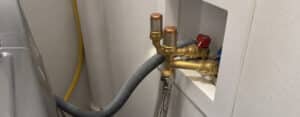
| As the washing machine or dishwasher stops filling | The appliance’s solenoid valve, which shuts in milliseconds. The most common cause by a wide margin |
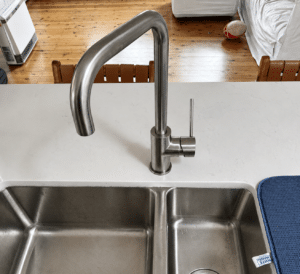
| When you turn a tap off quickly, but not slowly | Pressure, and usually a worn tap washer letting the seat slam |
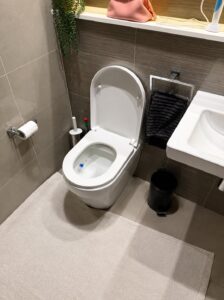
| A few seconds after the toilet finishes refilling | The cistern inlet valve closing hard, or a failing float valve |
| On a mixer tap, at a particular position | The cartridge, which is a replaceable part rather than a new tap |
| Ticking or creaking rather than banging, after hot water use | Thermal expansion, pipes moving against timber as they warm. Not water hammer and usually harmless |
| Randomly, with nothing running at all | Worth a closer look. Could be a neighbour’s supply, a failing valve, or a leak cycling something on and off |
The appliance row is the one that catches most households. An electric solenoid valve closes far faster than a human can turn a tap, so it generates the hardest shock in the house, and it does it on every fill cycle.
The useful version of this for us on the phone is the “but”. The pipes bang when the washing machine stops but not when you use the taps. Or they bang when you shut the kitchen tap fast but not slowly. Either of those sentences tells us what to bring.
Sydney’s Water Pressure Is Part of It
Pressure varies enormously across Sydney, and this is the part almost nobody puts a number on.
Sydney Water’s pressure management program states the network average is 52 metres head, roughly 510 kPa, and that most properties receive between 15 and 65 metres head. Some customers receive above 100 metres head, which is close to 1,000 kPa.
Their minimum obligation is 15 metres head, about 147 kPa, measured at the point of connection to their system rather than at your tap.
So a property near the top of that range is carrying something like seven times the minimum. That is why an identical washing machine bangs the pipes at one address and is silent two streets away, and it is why the fix is sometimes at the meter rather than at the appliance.
You can measure your own flow in about three minutes using Sydney Water’s method. Turn off every tap and appliance, note the meter reading, open the front garden tap fully for exactly one minute, then read the same meter again. The difference is litres per minute. Sydney Water says 18 litres or more means your pressure meets their standard, and if you are below it, 13 20 90 is the number to call so they can check for a local problem.
Worth noting what that test does and does not tell you. It confirms you are getting enough. It will not tell you that you are getting too much, which is the problem behind most water hammer.
The Fixes, Cheapest First
Work down this list rather than starting at the bottom, because the cheap answers are also the common ones.
- Re-clip loose pipework. Where pipes are accessible, under the house or in a cupboard, securing them stops the noise even when the shock remains. Cheapest fix there is
- Replace the tap washer or cartridge. A worn washer is often both the banging and the dripping, and a tap that drips constantly is frequently the same tap. Both are tap and toilet repairs.
- Replace a failing cistern inlet valve. Small part, quick job, and it fixes a slow refill at the same time
- Fit a water hammer arrestor at the appliance. A small device that gives the shock somewhere to go, fitted at the washing machine or dishwasher where the solenoid is. This is the right answer when one appliance is the whole problem.
- Fit or replace a pressure limiting valve at the meter. The whole-house answer when the pressure itself is the cause. It also protects every appliance, tap and flexi hose in the property, not just the noisy one.
A pressure limiting valve has a service life, and they do fail, usually by letting pressure through rather than by blocking it. If your property has one and the banging has started recently, that valve is worth checking before anything else gets replaced.
Why It Matters More Than the Noise
If it were only a sound,d you could reasonably ignore it. It is not only a sound.
Every bang is a pressure spike through joints, solder, threaded fittings, appliance valves and flexible hoses, and the damage is cumulative rather than sudden. Nothing fails on the hundredth bang. Things fail on the ten thousandth.
Sydney Water says this plainly about its own network: “High water pressure can lead to breaks in water pipes and cause leaks in our water system.” They spend money reducing pressure deliberately, and they list longer-lasting pipes as one of the reasons. The same physics applies on your side of the meter, with nobody managing it for you.
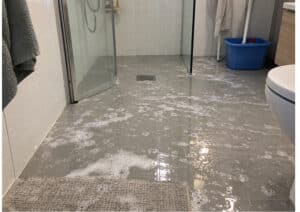
The components that give way first are the weakest ones, which in most houses means the braided flexible hoses under sinks and vanities, and the joints in whatever pipework is oldest. A burst pipe that arrives at 2 am after years of banging is not bad luck.
Older properties carry more of this risk, because they have more joints, more generations of pipework and clips that have had decades to work loose. The pattern shows up across the other plumbing problems in older Sydney homes.
Tell us what sets it off.f
Which appliance or tap, and whether it happens on a fast shut-off but not a slow one. Those two answers usually tell us whether this is a washer, an arrestor or a valve at the meter, before we arrive. Call R&G on 0461 330 531. $0 call-out fee, 24 hours.
Frequently Asked Questions
Why do my pipes bang when the washing machine stops filling?
Because the machine’s solenoid valve closes in milliseconds, far faster than anyone can turn a tap, so it creates the hardest pressure shock in the house and repeats it on every fill. It is the most common single cause of water hammer. A water hammer arrestor fitted at the appliance is usually the right fix.
Is water hammer actually damaging my pipes?
Yes, cumulatively rather than suddenly. Each spike stresses joints, fittings, appliance valves and flexible hoses, and the failures arrive years later. Sydney Water reduces pressure in its own network partly because high pressure causes pipe breaks and leaks, and the same physics applies on your side of the meter.
How do I check my water pressure in Sydney?
Sydney Water’s method measures flow. Turn off all taps and appliances, note the meter reading, open the front garden tap fully for one minute, then read the meter again and subtract. 18 litres or more means your pressure meets their minimum standard of 15 metres head. Below that, call them on 13 20 90. Note that this test shows whether you have enough, not whether you have too much.
What is normal water pressure for a Sydney house?
Sydney Water puts the network average at 52 metres head, roughly 510 kPa, with most properties between 15 and 65 metres head. Some customers receive above 100 metres head, close to 1,000 kPa. That spread is why water hammer is severe at one address and absent at another with the same appliances.
My pipes tick rather than bang. Is that the same thing?
Probably not. A tick or creak that starts after hot water use and fades is usually thermal expansion, with pipes moving slightly against timber as they warm and cool. It is normally harmless, and it is a different problem from the sharp bang of a valve closing. If it is loud enough to be annoying, re-clipping or insulating the accessible runs helps.
Stop the banging before something gives
We diagnose water hammer, replace washers, cartridges and cistern valves, fit arrestors and install pressure limiting valves across the Upper North Shore, the Hills District and the Parramatta and Ryde corridor. Fixed price before anything starts, no call-out fee. See tap and toilet repairs, or emergency plumbing if something has already let go.