Turn the water off first. Then call.
R&G are licensed Sydney plumbers, on call 24 hours. $0 call-out fee.
A burst pipe is one of the few plumbing problems where the first five minutes decide what it costs. Water keeps arriving until you stop it, and almost all of the damage is done by the water that arrives after you notice.
Do these in order.
1. Turn the Water Off at the Meter
Not the tap under the sink. The mains.
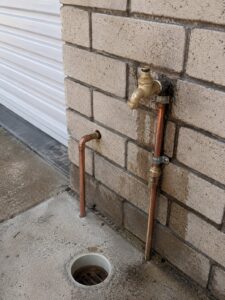
Your water meter is almost always at the front boundary, near the footpath, often in a small box set into the ground. There is a tap beside it. Turn it clockwise until it stops.
If you have never found it before, look along the front fence line for a rectangular lid, usually black or green. Lift it. The meter and the tap are inside, often under leaves or dirt.
Then open a tap inside the house at the lowest point, such as a laundry tub or an outside tap, to drain what is still in the pipes. That reduces how much is left to escape.
If the tap at the meter is seized and will not move, move to step two and call.
2. Deal With the Electricity Before You Touch Anything
This matters more than the water.
If water is coming through a ceiling, running near power points, or anywhere near the switchboard, treat it as an electrical hazard. Water and electricity in the same space is the part of a burst pipe that hurts people.
So: do not stand in water to reach a switch. Do not use a ceiling light in a room where water is coming through the ceiling. If you can safely reach your switchboard from a dry position, turn the power off at the main switch.
If you cannot reach it safely, leave it, get everyone out of that part of the house, and tell the plumber on the phone that water is near electrical fittings. If anything is sparking or you can hear it arcing, call an electrician as well.
A ceiling holding water is also a collapse risk. Stay out from under it.
3. Photograph Everything Before You Clean Up
Thirty seconds, and it is the difference between a claim and an argument.
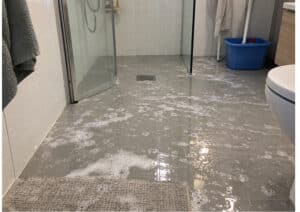
Photograph the water, the affected rooms, anything of yours that is wet, and the pipe itself if you can see it. Video is better than stills.
Do this before you mop, move furniture or pull up carpet. Insurers generally treat a burst pipe as a sudden event, which is usually covered, and a gradual leak as maintenance, which usually is not. Your photographs are what establish which one you had.
Check your product disclosure statement rather than assuming either way, but do not lose the evidence while you find out.
Water off and still rising?
Call R&G on 0461 330 531. If water keeps coming after the meter tap is closed, it is draining out of the system rather than still arriving, and that tells us where to look. $0 call-out fee.
4. Contain What You Can, Safely
Only once the water and power are dealt with.
Buckets and towels under the worst of it. Move electronics, documents and anything absorbent out of the room. Lift rugs. Open windows and doors to get air moving, because drying time is what decides whether you get mould.
If water is pooling above a ceiling and bulging the plaster, do not pierce it to drain it unless you are certain the power to that area is off. People do this and get hurt.
Where Burst Pipes Usually Happen in Sydney Homes
Useful to know, because it tells the plumber where to start.
Flexible braided hoses under sinks and behind appliances. The single most common cause of sudden household water damage in Australia, and the one most people have never inspected. They sit under the kitchen sink, under the vanity and behind the washing machine, and they fail without warning.
Old galvanised steel supply pipe. Standard in Australian homes until the 1960s and well past its service life anywhere it survives. It corrodes from the inside until the wall gives way. If your house predates about 1970, this is a live possibility, as our guide to plumbing problems in older Sydney homes explains.
Joints stressed by water hammer. Pipes that bang when a tap or appliance shuts off are taking a pressure spike every time, and the fitting eventually fails.
Corrosion where old pipe meets new. Where a partial renovation joined galvanised steel directly to copper, the steel side corrodes faster than either pipe would alone.
Pipes in a wall or under a slab, which is the version you do not see coming. The first sign is usually a damp patch, a jump in the water bill, or a warm spot on the floor.
What Not to Do
Do not try to patch it yourself with tape while the water is on. It will not hold at mains pressure, and you lose the minutes that matter.
Do not turn the water back on to check. People do this to see whether it is still leaking. It is.
Do not open a ceiling that is holding water unless the power to that area is off and you are standing clear.
Do not start pulling up wet flooring before it is photographed, and before someone has told you whether it can be dried rather than replaced.
What a Plumber Does When They Arrive
Confirms the water is isolated and whether it can be isolated more locally so the rest of the house keeps running.
Finds the burst. Visible is quick. In a wall, under a slab or under the floor takes locating, and that is a different job from a repair.
Repairs or replaces the failed section, and checks what caused it. A hose that failed is a hose. A length of corroded galvanised pipe that failed is a warning about the rest of the house.
Tells you what else is at risk. If one flexi hose has gone at fifteen years old, the others are the same age.
More on how we handle burst and leaking pipe repairs across Sydney.
Frequently Asked Questions
I cannot find or turn the mains tap. What now?
Call a plumber and say exactly that, because it changes how fast they need to get there. In the meantime, isolate what you can: most toilets, sinks and hot water units have their own small shut-off valve nearby. They will not stop everything, but they may stop this.
Is a burst pipe covered by home insurance?
Usually, because it is a sudden event, whereas a slow leak that caused damage over months usually is not. Policies differ, and the pipe itself is often treated separately from the damage it caused. Photograph everything before you clean up, then read your product disclosure statement.
Can it wait until morning if I have turned the water off?
Sometimes, and it is a fair question given after-hours rates. If the water is off, nothing is actively getting worse, and you can manage without water overnight, morning is reasonable. If water is near electrical fittings, a ceiling is holding water, or you cannot isolate it, it is tonight.
How do I know if a pipe has burst inside a wall?
A damp or discoloured patch that keeps growing, paint bubbling, a musty smell, a sudden jump in the water bill, or the sound of running water when every tap is off. Check your meter with everything turned off: if it is still ticking over, water is going somewhere.
Licensed, 24 hours, no call-out fee
Tell us whether the water is off and whether it is near anything electrical, because that decides how fast we move. Fixed price before any work starts, across the North Shore, the Hills and Western Sydney. See how we handle burst pipe repairs and emergency plumbing across Sydney.